Thursday, 19 September 2013

Call my Agent

Last week we talked about working with Promoters and how this changes the relationship between you, the venue, the consumers of your music and the people who come to the event.

This week, we go  the next step and bring in an Agent into the mix and see what happens.

Firstly, lets try and understand what an Agent does.

An Agent is primarily focused with Marketing and then Sales of your Brand (band).
A bad agent will spend all their time on Marketing and none on Sales or all their time on Sales and none on Marketing. Good agents spend an equal amount of time on both.
Agents usually work on commission but some may ask for a retainer (avoid these). A low quality agent may take as low as 10% of your earnings, a really good one may ask for 50% or more.
In general, you get what you pay for. Remember that a low agent fee out of a low income might be lower than a high agent fee out of a high income.

Some Agents take a low commission and try and represent lots of bands (as in hundreds), they care less about you and are just trying to sell any band that is on their books. They are more focused on events and finding a band for someone else's event (think wedding bands). These are typically the websites you see that list bands for hire, you just sign up and you are listed straight away. These type of Agents want to list as many bands as possible to maximise the chances that someone will pick any one of their bands for their event.
You would be unwise to sign an exclusive agency deal with an individual Agent that had more than 5 or 10 bands on its books.
At the other end of the scale are the high commission Agents that only have a few bands on their books. These guys are working almost exclusively for you and put in long hard hours to get you as much work as possible. If they don't succeed they don't get paid so in general are worth every penny. These are the only agents that specifically want to find work for you (as opposed to anyone on their books).

In the middle we have what I call "The Sharks" and these are the Agents to watch out for. They usually have 10 to 20 bands on their books and they seem to charge a relatively low commission, however, what you don't know is that often they are double dipping.

A classic example of this is as follows:

An Shark goes to an event and offers their services as an "Entertainment Coordinator".
The Shark is contracted and paid by the event to find entertainment.
The Shark then offers up entertainment that just happens to be signed to the Shark for an agency agreement.
The Shark inflates the price of the entertainment by quite a bit.
The Shark then gets quotes for Sound, Lighting, Staging and other production services and slaps a nice big margin on top after screwing down the suppliers.
The event books it all through The Shark who then:
  • Is paid by the event a "Finders fee"
  • Charges the Event X for the bands and tells the bands that they are getting paid Y.
  • Takes a commission off Y as well
  • Makes a profit on the Sound, Lighting and other Production
This happens all the time and seems to be an increasingly common practice in NZ so watch out. It wouldn't be so bad if the Sharks were up front about it. If you are signed to an Agent who you suspect is a Shark, try getting a quote for your band by getting someone else to contact them, then make sure you are sitting down when you see the price.

Now lets take a look at the relationship between your band and an Agent..

Your band is a customer of the Agent.
Your Agents product is your Brand.
Your Agent is a Supplier to you (you are the customer and the customer is always right).
Your Agents consumers are Events and Promoters.
Your Agent Markets your brand in order to try and sell it to its Consumers.

An Agent never does any promotion, that is still up to either you or a Promoter.

Agents can save you a lot of time and a well connected agent can get you some great gigs and opportunities, but watch out. If after signing up with an agent you aren't significantly further ahead after 6 months, you may be signed to a shark.

Thursday, 12 September 2013

Tickets available on the door.

Sometimes we forget that a band is a business.
To not treat it as such makes it a hobby.
Hobbies are fun and interesting and if you are happy with that, that's great, but if you want people to come to your gigs and if you want your band to be successful, you need to treat it like a business.

Any business needs to fully understand the market for its products and services and exactly who it's customers and consumers are.

If you don't like all that stuff then don't expect to succeed.
A new business that starts up and decides to make 'widgets' will go broke pretty quickly if it doesn't market those widgets to people who it thinks might buy them. If the widget maker just says "All I want to do is make widgets" and doesn't advertise, promote and market their widgets, then how successful do you think that widget business will be?
Most people in business don't want to do all this stuff, all they want to do is make their widgets, but unfortunately Marketing and Promotion is often more important than how good your widgets are.

Last week we determined that when you play in a bar with no door charge and are paid by the bar that the bar is your customer and the punters are your consumers.

Now lets see what happens when we put on a door charge...

If your band takes the door it is highly likely that the bar will not pay you a cent. There may in fact be a venue fee that you have to pay given there is no guarantee to the bar that it will be better than an ordinary Saturday night. If you put on a show and 5 people turn up, then its not just you who loses out, the bar loses out as well because it probably would have been a busier night to let people in for free and have no entertainment. The venue fee covers this risk and also ensures that only people who are serious run an event.

In this case the bar changes to become a supplier and you are their customer.
The punters continue to be both your and the bars consumers, however they also become your customer given that you are now trying to sell them something directly. Oh how this changes things.

This doubles the difficulty for you because now you are responsible for both Marketing and Promotion instead of just Marketing.

Not only do you need to Market your brand and tell people that your band is super awesome, you also need to Promote the gig and try and convince people who like your brand to come out and pay money to get in. This is why many bands fail when they step up to taking the door because they simply forget to Market their brand and focus solely on Promoting the gig. If all you do is promotion, then you do not create desire and as a result, activities that are more desirable win out over your event.

Often, when people only do promotion, 10 punters come and then the band blame it on the Rugby or the weather or the venue.
I'd be very rich if I got a dollar for every time I have heard bands blame a rugby game for the failure of their show.
Rugby does not stop people coming to gigs, lack of Marketing does. All that has happened is that the Rugby has done a better job of Marketing itself than you have. It is more desirable to watch the rugby.

In this scenario the venue has zero responsibility to promote your gig, its totally up to you (a good venue will certainly help out).

The venue is focused on Marketing itself to bands who it wants to come and hire its venue and bring punters through the door for it to sell drinks. It wants the best bands it can get (and by best we mean bands that have done the most Marketing).

In this model your band only gets paid if people turn up, however your opportunity to make a lot of money is much greater. You are assuming all the risk so you will also make all the profit if you do a good job.

If your door charge is $10 and 10 people turn up then you make $100 and go home depressed. However if 200 people turn up then you make $2000 and are doing much better than the average plumber.

Here are a couple of examples of Marketing and Promotional messages you would use in this scenario:

Marketing: "Band X is a high energy entertainment experience that always gets everyone up on the dance floor, if you come to one of our shows you are guaranteed to have the best night ever"

Promotion: "Band X is playing at Venue Y on the 5th of November"

A good Venue will do everything it can to help with promotion but lets be clear that in this scenario, its up to you to drive the Promotion and the Marketing. If you don't do both equally well your event will be fail miserably.

Thursday, 5 September 2013

Marketing vs Promotion

Two weeks ago I posted an article comparing Musicians to Plumbers in skill level and highlighting the pay disparity between the two professions. Then last week I dropped a bombshell describing why it was that Musicians often never get paid what their skill level suggests they should be worth.

Several people wrote me emails about that and linked to articles questioning why musicians should be responsible for promoting gigs, bringing punters to venues and generating revenue for bars. Musicians should "only have to focus on music", was the general tone of the emails and promoting a gig should be up to the bar.

This week, I want to explore that more and highlight why that thinking is so very wrong. I'm going to start with the scenario where a venue hires you to come and play in their venue and there is no cover charge on the door. The venue is making money solely from their bar takings and you are paid no matter what.

There are two distinct concepts that often get blurred into one and that is the source of the problem. Marketing and Promotion. Many people call activities Promotion when it is actually Marketing and many people call Marketing, Promotion. They are different, very very different.

Lets look at a real world example dear to my own personal taste buds.
Coca-Cola has a product, it sells Coke and lots of it, but in general it doesn't sell it directly to me and you. You can't walk up to Cokes office and buy an ice cold Coke. It sells to dairies and supermarkets etc who then sell it to me and you. Coke doesn't do very much "Promotion".
Whoooa, you may say, Coke has one of the biggest advertising budgets in the world.
You see their "Adverts" everywhere.

WRONG!!!
Coke does "Marketing". You will rarely ever see a Coke ad on TV that says "Buy Two Cokes and get another one free", that's because that kind of message is "Promotion".

Coke has one goal and that is to make you feel that Coke is the best product and that you should buy it from anywhere you can get it.

If you see a petrol station banner that is encouraging you to buy two Cokes for $4, then that is Promotion. It is not saying that Coke is the best product, its simply trying to get people to buy more Coke from that particular petrol station as opposed to anywhere else.

Bands and Venues have this exact same relationship.

Your band is a brand just like Coke and it is your job as the owner of that brand to Market the brand.
Music is your "Product" that you are selling to your Consumers (the people that listen and that come to venues).
BUT your Customers are the Venues and they aren't buying your music, they are buying your "Brand".

Note that subtle difference there... you have Consumers of your Music and Customers of your Brand.
The people dancing on the dance-floor are Consumers and the Manager of the Bar is your Customer.

On the night of the event, your Consumers are also the same as the Venue's Consumers.
The Venue is holding an event and it is therefore the job of the Venue to Promote the event just like a petrol station advertises its "buy two" deals but all they are doing is announcing when you are playing at the venue, its up to you to Market the brand which is what actually gets people to come.

Your Marketing activity is aimed at raising the profile of your brand, discovering the niche audience that your brand appeals to, targeting it and accumulating as much of a market for that brand as you possibly can. This includes web pages, facebook, twitter and even music sales. The more marketing activity you do, the more valuable your brand will be to the venue and the more you will get paid.

When a Venue hires you, they are 'borrowing' that brand for the night. They should run advertisements, put up posters and billboards that says that your brand is coming to their venue on date X. The music itself is 100% totally irrelevant to the venue.

The ultimate insult to a band (and a sure fire sign you have a weak brand) is if the venue simply advertises "Live Music Tonight". That means your brand isn't even worth mentioning in their promotions. It is the same as a petrol station peeling the labels of Coke bottles and selling them as "cold drinks that might taste good".

Your message to your consumers should be.. "If you come to our gigs you will have a great time".
The Venues message is "Come to my venue on this date to see this band (brand)".

If you have a strong brand, then lots of people will come and your brand will be valuable to the venue.
If you have a weak brand, then not many people will come and your band will not be valuable to the venue.

Generally, people that complain about not being paid enough as a musician, have weak brands and have not invested the time to market and build up the value of their brand.

Next week we take it a step further by looking at how these same relationships subtly change when we introduce things such as door charges, tickets and or promoters.

Thursday, 29 August 2013

Are you worth Shit?

Last week I talked about the value of a band and compared a musician to a plumber in terms of skill and cost.
This worked out to about $355 per musician for a local nights performance if you were to consider that a Musician and Plumber are fairly equal in skill. Lots of musicians probably thought "yeah, that's what we should be charging".

Now, I'm going to flip the argument completely on its head and offer a totally different alternative perspective and perhaps some answers as to why many bands don't earn that much, or in some cases, earn far far more per night.

Imagine for a minute that you own a bar and you would like to have a band come and play to draw in a bigger crowd on a Saturday night.
Saturdays have been a bit quiet lately because another bar has opened down the road.

You ring around and you find out that all the bands charge the same price. They all charge $1420 + GST as per our plumber calculation last week.
You end up booking two bands for the next two saturdays, lets call them Band A and Band B. Musically and talent wise, both bands are exactly the same and have basically the same sets / song lists.

Band A is a brand new band, they don't have any posters yet and the guitarists sister is currently working on a website which should be up sometime in the next few months. They have a facebook page and have 80 fans which are mostly friends and family because they only started up the page last week.
The band turns up and they are great, perhaps a bit loud, they don't bring in any extra punters and halfway through the night the regular crowd starts to leave because its getting too loud. Total bar turnover for the night is $1200 which is $100 below what you would get on a normal Saturday night. You pay the band their $1420 and start to wonder whether having bands was such a good idea after all.

The following Monday, Band B turns up with 20 posters to put up and wants to discuss whether you would like to do a drinks promotion that they can promote through the week, perhaps a 2 for 1 deal on the first drink. On Tuesday, they announce to their 7000 facebook fans that its going to be a huge night at your venue and that if their fans come down there will be a drink's special on an hour before they play. On Wednesday, they drop a line to their friend who works at a radio station and do an on air interview promoting your venue and the gig. On Saturday, when they turn up, the bar is already full because of the drinks promotion and there is a queue at the door by 8pm. The night sets a record for bar turnover at $5200. Band B are also pretty good, but you actually think that Band  A might have been a bit better.

Now, lets contrast these two bands and compare the situation to the plumber comparison of last week.
Technically yes, the work of performing that the two bands do is worth the $1420 + GST that they charge, but in reality Band A cost the bar $1420. The bars profit from having the band was -$1640. In other words, the bar would have been better off by $1640 if they had not had Band A in to perform.

Band B cost the same at $1420, however they generated an extra $4000 that the bar would not have made if they hadn't been there so the profit that Band B generated was $2480.

Are both these bands worth the same amount. Clearly not, I would be as bold as to say that Band A is not worth anything.
Zip, Nada, the band should in fact be paying to play because they deliver -$100 in value to whatever venue they perform in even if they charge nothing. The only way the venue would be better off having Band A in to perform would be if the band payed the venue $101.

Band B however is worth anything up to $3999. If they charge $3999 then the bar would still be better off by $1 by having them in to play. In reality, their performance might be worth 25% to 50% of this value depending on how consistently they deliver that kind of return. If we run at 50%, then that means that band B would be worth $1240 to $1300 per night to this bar.

What this does is put into context how hard bands have to work in order to justify the fees they charge.
If you just turn up and play, then don't expect to be worth the same as a Plumber. If you do all the promotion and actively generate punters for the venue, then you can expect to be worth something closer to what a Plumber is worth.

Here is the key....
The value of a Plumber is not the years of training they spent learning how to be a Plumber. Its not how good they are and how fancy the sign writing is on their van. Its not how far the Plumber travelled to get there. The value of a Plumber is this and you should frame it...

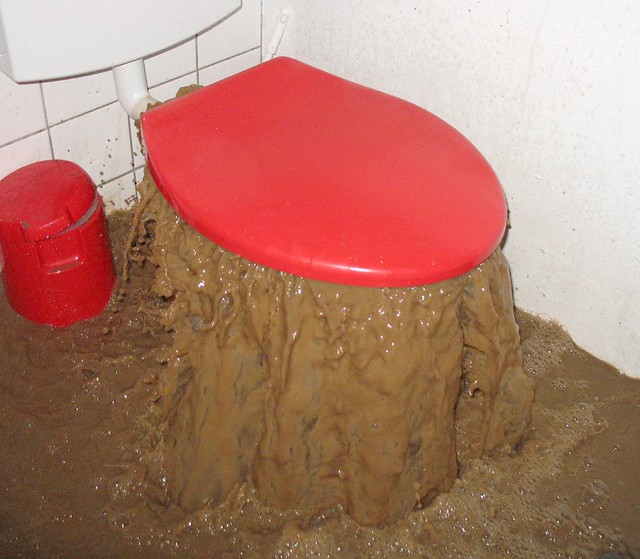
"At 3am, when your toilet floods spewing shit all over the floor, leaking crap into your carpet and continuing to spew more and more water onto the floor, the value of a Plumber is equal to getting your immediate problem solved."

In other words, when there is shit on your floor, a Plumber is worth as much as you are prepared to pay to come and fix it so that shit stops flowing onto your floor. At that point you don't care about their training, how experienced they are, how flash their van is etc. All you want is someone to come and stop the shit.

Musicians are the same, the people that pay musicians don't care how many years you have been playing, they don't care that you have a fancy PA system or guitar amp. They don't even care if you have a flash van to cart your gear around in. All they care about is a full bar and a full cash register and if that isn't also your number one concern, then don't expect to be paid the same as a Plumber.

A Plumber that can't stop the shit from flowing won't get called again and might not even get paid.
Why then do musicians who can't pull a crowd and don't put in the hard yards when it comes to marketing and promotion, also expect to be paid?

Thursday, 22 August 2013

How much are you worth?

Over the years, I have been in a lot of discussions about how much live music is worth.
The only thing I can categorically state after all these discussions is that:
  • Most bands and artists believe they are worth far more than they really are but in actual fact often charge far less than what they are actually worth.
  • Most venue owners, promoters and booking agents think bands charge far too much but often pay far more than a band is worth.
Is that slightly confusing...

So how do we resolve this.
There are two ways of doing this, a measure based on a good relative comparison, or a measure based on value. I'll look at each, but this week we focus on finding a good relative comparison.

I'd like to introduce you to what I call the "Plumber Test".
In my opinion a good musician requires about the same level of skill as a Plumber to do their job.
Trainee Plumbers spend around 144 hours per year on theory.
They learn their trade over a 4 to 5 year period.
At the end of their training they need to spend about $20k to $30k on tools to do their job plus they may also need to buy a vehicle.

In contrast, a musicians easily spend 5+ hours per week rehearsing (260 hours per year).
It takes at least 4 to 5 years of 10 to 20 hours per week practice to master an instrument.
In order to play in a band, you could easily spend $20k to $50k on your instrument, sound equipment and vehicle.

I think this makes it a fairly valid comparison.

The current hourly charge out rate for plumbers is $85 to $95 an hour. Note this is not the what plumbers get paid, this is how much they charge, in reality they are probably only paid 25% to 50% of this amount. The rest covers tax, ACC, vehicle costs and also a profit for their employer. If they are self employed, they keep this profit.

As most musicians are self employed, a charge-out rate of $85 per hour would equate to around $255 per musician for a 3 hour performance. But what about the driving time to get there and the time to setup, pack down and drive home again. Plumbers usually charge for this time, but they may do so at a lower rate. Lets roll with $40 an hour for non performance time. Say you have a 3 hour gig at a local pub starting at 9pm.

You start loading up at 3pm, drive to the venue, load in and setup. A good performer should be able to setup and sound check within an hour so lets allow 1 and a half hours for transport and load in. If you choose to hang around before the gig, that's on your dime. After the gig, there is around another hour of pack out and travel. That gives us 2 and a half hours of travel / setup at $40 an hour and 3 hours of performance at $85 an hour. That's $355 per musician. So a 4 piece band using the Plumber Test comes in at around $1420 + GST for a 3 hour show.

Now, if one person owns the van or one person owns the PA system, you might decide to compensate accordingly, but  this seems about right for a nights work to me.

Referring back to the Plumber Test.. How much would you pay to call out 4 plumbers to your house on a Saturday night when they live an hour away and then spend 3 hours fixing your flooding sewer pipe.
If you got a bill of $1400 for that scenario, I don't think you would feel too ripped off.

So the Plumber test works in most situations, however where it falls down is when one band is considerably better than another (just like some Plumbers are a bit dodgy). Or perhaps one band can pull a massive crowd and another band can't. This is where the concept of value kicks in and our Plumber Test goes down the toilet quicker than a leaky sewer pipe. Next week we will look at value and determine exactly what you are worth.

Thursday, 8 August 2013

Speaking of Speakers Part 3

There are many different types of speaker cabinet designs.

Line Arrays

Line Arrays have enjoyed a recent resurgence as the modern 'must have' speaker system. However their roots go back to the days when Town Halls all around the world had old style column speakers hanging in the corners. There is a saying in the sound industry that if you have to ask if you need a Line Array, you don't need a Line Array.

Line Arrays are particularly good at a narrow set of functions which limits their practical use to covering very long distances and covering wide areas. This makes them particularly useful for large outdoor concerts, but not brilliant in other scenarios. Line Arrays are relatively complex to setup and require a minimum of 4 to 6 individual cabinets joined together to work properly. They are also only practical when flown from the roof or a dedicated tower.

There has been a recent increase in small Line Arrays marketed at musicians and bands to take advantage of the buzz around the term. I don't recommended that you purchase a Line Array that you can buy in a music shop.

Passive Mid / High Speakers

These speakers are the most commonly used in the industry for small events.
They consist of one or two Mid Range speakers and a Horn speaker combined in a single speaker cabinet. They can produce almost the entire frequency range apart from the lowest sub bass frequencies. For extra bass they are stacked on top of additional Sub Woofers. There are two modes of operation, Bi-Amp and Passive Crossover.
In Bi-Amp mode, a separate amplifier drives the Horn Speaker from the amplifier that drives the Mid Range speakers. In Passive Crossover mode, a special device allows the entire cabinet to be powered by a single amplifier by splitting the frequencies and directing them to the right speaker.

Passive Crossovers are less than ideal but are low cost. Bi-Amping a speaker ensures that if a large amount of power is required for a split second to drive the Mid Range speakers, that it does not affect the power going to the Horn Speakers. This generally means Bi-Amped speakers are louder and clearer.


Thursday, 1 August 2013

Speaking of Speakers Part 2

Last week we talked about speakers in general. This week we are talking about the different types of speakers we might need in a PA system.

Horn Speaker

Horn Speakers reproduce very high frequencies. There are two parts to a Horn Speaker. The horn itself is the visible part that looks a little bit like a giant funnel. The horn driver is bolted onto the back of the horn and actually produces the sound.

There are two types of horn driver, Piezo based horns are relatively cheap and compression horns are comparatively more expensive. The only major difference is the volume (measured in dB Sound Pressure Level SPL). Piezo horns cannot produce high SPL and are easily blown while compression drivers are capable of producing ear splitting loud Sound Pressure Levels.

Horn speakers are extremely directional so you can only hear the high frequencies where you point the speaker. They also require very little power to produce very high SPL's.

Mid Range Speakers

Mid range speakers are usually small speakers (from 5" up to 15" in size) that produce the frequencies below those that a horn can efficiently produce and above the frequencies of a Sub Woofer (120Hz upwards). They are usually a traditional speaker design. Mid range speakers are moderately directional and the higher the quality of the speaker cabinet, the more directional the mid range frequencies will be. Mid range speakers require a moderate amount of power to produce high SPL's.

Sub Woofers

Sub Woofers are usually speakers between 12" and 21" in size and are recognisable by their very large magnets.
Sub Woofers produce a very low range of frequencies in the bass range from 40Hz up to 200Hz maximum. Even though this is a very small range of frequencies, Sub Woofers require a massive amount of power to move the giant cones through the air.

Next week we will look at the different types of speaker cabinet design.